
Jay Kelly: A Review
By Keaton Wilder Marcus
Noah Baumbach’s Jay Kelly, which debuted at the Venice Film Festival and will arrive at homes on Netflix December 5th, is a film full of inside jokes. Now, a reader may examine those words and scoff at the notion that Baumbach’s sense of humor in Kelly is one of gatekeeping the audience from the inner circle of the movie’s characters. On the contrary, we feel as if we have known these people for a hundred years.
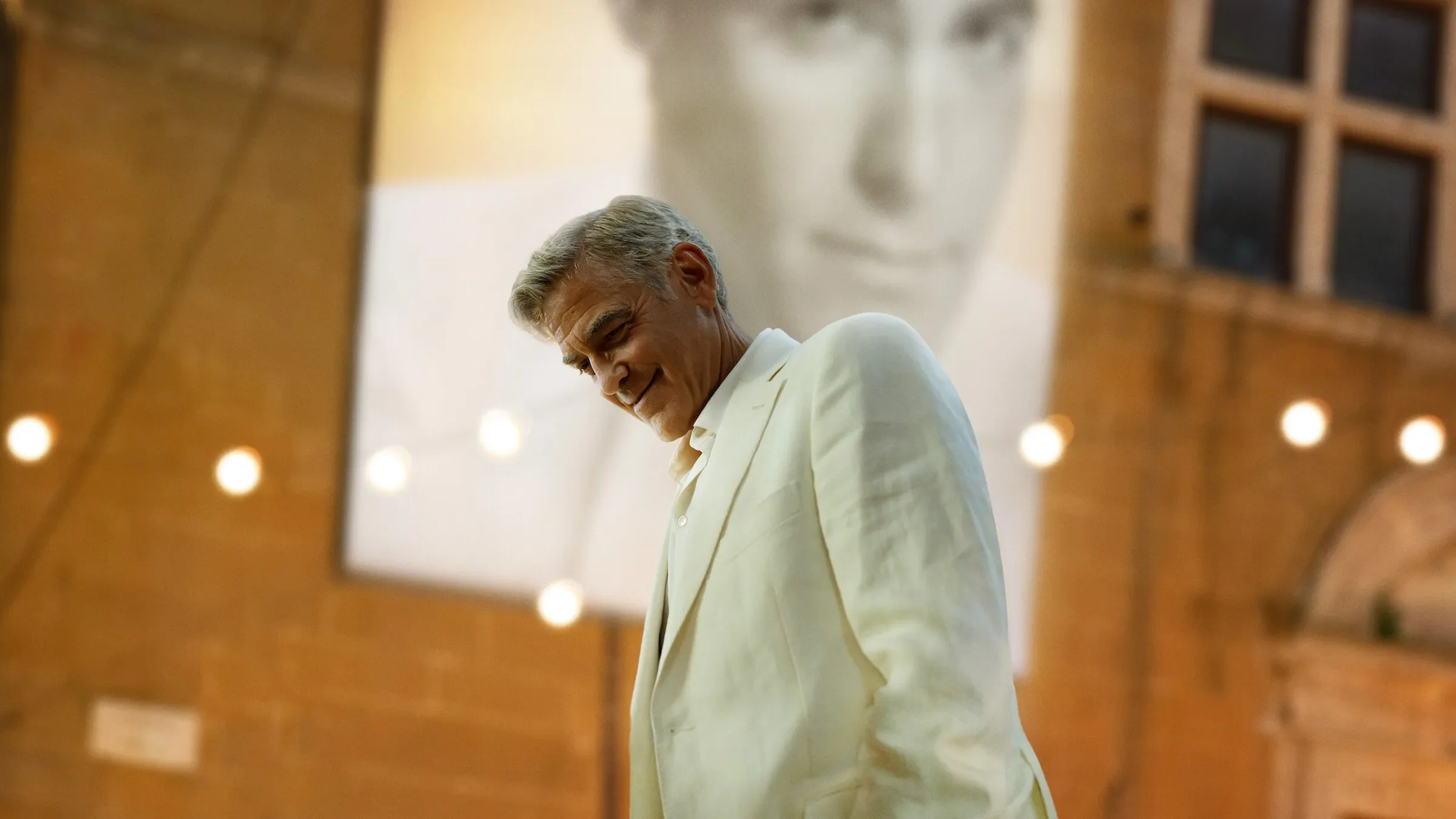
George Clooney portrays the titular Kelly - an aging movie star who sends his manager, Ron Sukenick (Adam Sandler) into a spiral after he gets into a bar fight with old colleague Timothy (Billy Crudup) and decides to stalk his daughter Daisy (Grace Edwards) around Europe before she goes to college. Kelly is no question a fictional alter ego for Clooney’s existence as a movie star who makes audiences empathize with a fictional character they’d punch in the face if they knew personally.
That’s the question entering our minds that Baumbach is sharply self-aware of in Kelly: why are we watching a movie about the luckiest man in the world learning life lessons at the expense of most people around him? There are many flippant answers to that question. Perhaps it’s because Clooney is magical at making us believe he plays good people; or that Adam Sandler portrays a father we’d love to drink with at a rich kid’s Bar Mitzvah. There are a couple more interesting ones as well, and those are the answers that engrossed me so deeply while watching this movie.
Take the moment Sandler’s Ron is the only man in the room who can rationalize with Jay: who’s in the midst of frantically packing his bags to find Daisy. Ron doesn't convince him to stay - he tells an inside joke instead. He tells Jay to hit their favorite resort and order a glass of Pinot before doubling down with: “remember the towels?” It is difficult to explain to the reader why seeing Sandler and Clooney fall over themselves with laughter over these ambiguous towels displays the artistry in Baumbach’s inside jokes; and yet it made me grin like a child.
To restate my observation under new context: we feel as if we have known these people for a hundred years. The towels are one of many inside jokes in this movie. Ron playing father-daughter doubles tennis and the opposing father whining “fine, let chaos reign” to Ron’s request for a re-serve; Ron’s little boy clawing his hands on the court’s fence and asking him if he knows ghosts; Kelly’s rider explicitly stating he needs cheesecake everywhere he lands even though he despises cheesecake with every fiber in his being; various characters chastising Jay for “never being alone” before his assistant, without fail, interrupts every conversation he’s engaged in by bringing him a bottle of water. Perhaps this review is as sentimental as the flashbacks featured in this movie: which feature younger versions of Kelly and Timothy in acting school as well as a disastrous therapy session between Jay and his older daughter Jessica (Riley Keough).
As professionally-directed as these flashbacks were, they risk cheapening the exclusivity you feel with these characters. We as audience members have no need to know every detail of Jay’s backstory with Timothy or with his two daughters because Baumbach’s inside jokes tell us enough. The flashbacks are like a breach of contract - as if Baumbach is telling the entire world the secret password to his club. We only need Clooney’s masterful facial expression as Daisy turns away from him as a daughter abandoning a father into the world of college; or maybe Greta Gerwig, Baumbach’s creative and romantic partner in real life, playing Ron’s wife with such a golden compassion that we feel as if we’re apart of these characters’ lives without the writer telling us we are.
Baumbach walks that tightrope admirably. If the film deserves any more praise, it would be to commend Baumbach for figuratively etching his name on every frame in the movie. Baumbach’s initials are embroidered in the fabric of each story he tells from his own experience growing up with divorced parents. The cameo he makes in what is easily the strongest flashback in the film - a love scene between Jay and his co-star-slash-fling with Baumbach present as the movie’s fictional director - is delightful in the language which creative audience members fluently speak. In other words, the secret club that Baumbach must not spill the tea on.
Jay Kelly marks Baumbach’s third collaboration with Netflix; his second with Laura Dern and Adam Sandler; his sixth with Gerwig. Mr. Baumbach has developed a creative community to which he enjoys penning filmic love letters to, and that likely explains why Kelly feels so humble. The film is also imperfect. It is about 30 minutes too long and could have used some more grit in how it satirized its titular character. Jay Kelly also left me confounded as the credits rolled because of how beautifully acted and directed it was. It is a film which I left with deep admiration towards, and perhaps Baumbach’s intention was a mere extension of an invitation into his secret club.
With that said, I accept, Mr. Baumbach.